96% SAY TRUMP IS THE “WORST AMERICAN OF ALL TIME” — BUT WHAT DOES THE POLL REALLY SHOW?
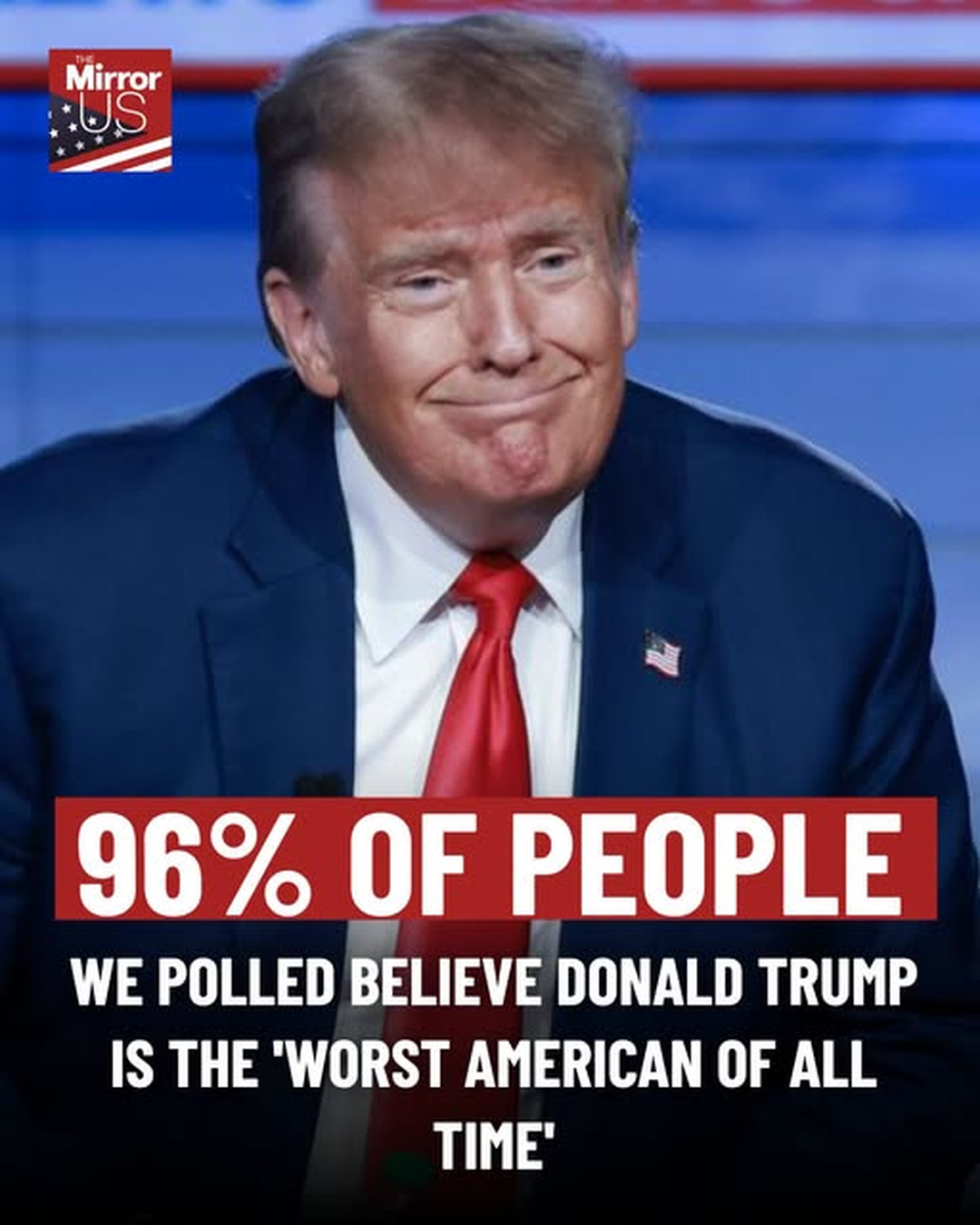
The Mirror US poll has reignited debate over Donald Trump’s presidency, but its striking result reflects the opinions of participating readers rather than the entire American electorate.
The article
A striking online poll has placed President Donald Trump at the center of another heated political debate, after 96% of participating respondents agreed with a harsh description of the president.
The poll was reported by Mirror US and asked readers whether they agreed that Trump was the “worst American of all time.” The result quickly attracted attention online.
According to the report published October 9, approximately 3,800 votes were recorded. Around 96% of respondents agreed with the statement, while the remaining 4% disagreed.
Despite the dramatic percentage, the result should not be interpreted as representing 96% of Americans. An online audience poll is different from a representative national survey using a carefully selected sample.
The controversy follows outspoken criticism from musician Jack White, who has increasingly used his public platform to criticize Trump and the president’s political decisions.
White reportedly used the phrase “The Worst American of All Time” in a social media post criticizing Trump’s remarks about Los Angeles and San Diego during a rally in Nebraska.
The remarks sparked criticism because of their references to American cities and the ongoing conflict involving Iran. The episode added another flashpoint to an already sharply divided national political conversation.
White’s criticism reflects one side of a broader public debate over Trump’s rhetoric, leadership style, foreign policy decisions and approach to political opponents.
Trump nevertheless retains a substantial base of supporters who back his agenda, including his positions on immigration, national security and reshaping the federal government.
The contrasting reactions illustrate how strongly opinions about the president can differ depending on political affiliation, personal priorities and views about his administration’s record.
More broadly, recent polling suggests Trump is facing significant challenges with public approval as the United States approaches the November 2026 midterm elections.
A Pew Research Center survey conducted September 28 through October 4 found that 30% of American adults approved of Trump’s job performance, while 68% disapproved.
Those figures measure presidential job approval, however, not whether respondents consider Trump the worst American in history. The two questions address different aspects of public opinion.
The Pew findings also showed declining support among people who voted for Trump in 2024. Sixty-seven percent of those voters approved of his performance in October, down from 95% early in his second term.
Economic concerns are another important factor shaping the political environment. Voters have continued to focus on living costs and their confidence in the administration’s ability to manage the economy.
Pew reported that just 35% of Americans expressed confidence in Trump to make good decisions about economic policy, highlighting a challenge for the administration ahead of the midterms.
Still, national approval ratings do not automatically determine election outcomes. Voter turnout, local candidates, congressional districts and the issues dominating individual races can all influence the results.
The Mirror poll also cannot establish how Americans rank Trump against every other historical figure. Its question invited respondents to express an opinion rather than make a measured historical comparison.
Its headline-grabbing percentage is therefore best understood as a snapshot of the opinions of people who chose to participate, not a definitive verdict from the American public.
The episode demonstrates how online polls and provocative political statements can amplify an existing national divide, particularly when elections are approaching and public attention is focused on presidential leadership.
For Trump’s critics, the result offers another indication of intense opposition to his presidency. For his supporters, the poll’s methodology leaves important questions about how representative the result actually is.
As the midterm elections approach, more reliable indicators will include representative polling, congressional race results and changes in voters’ views on the economy, foreign policy and presidential performance.
For now, the 96% figure is striking—but the most important question is not simply how many online respondents agreed. It is how Americans broadly assess Trump’s leadership when measured through representative research.