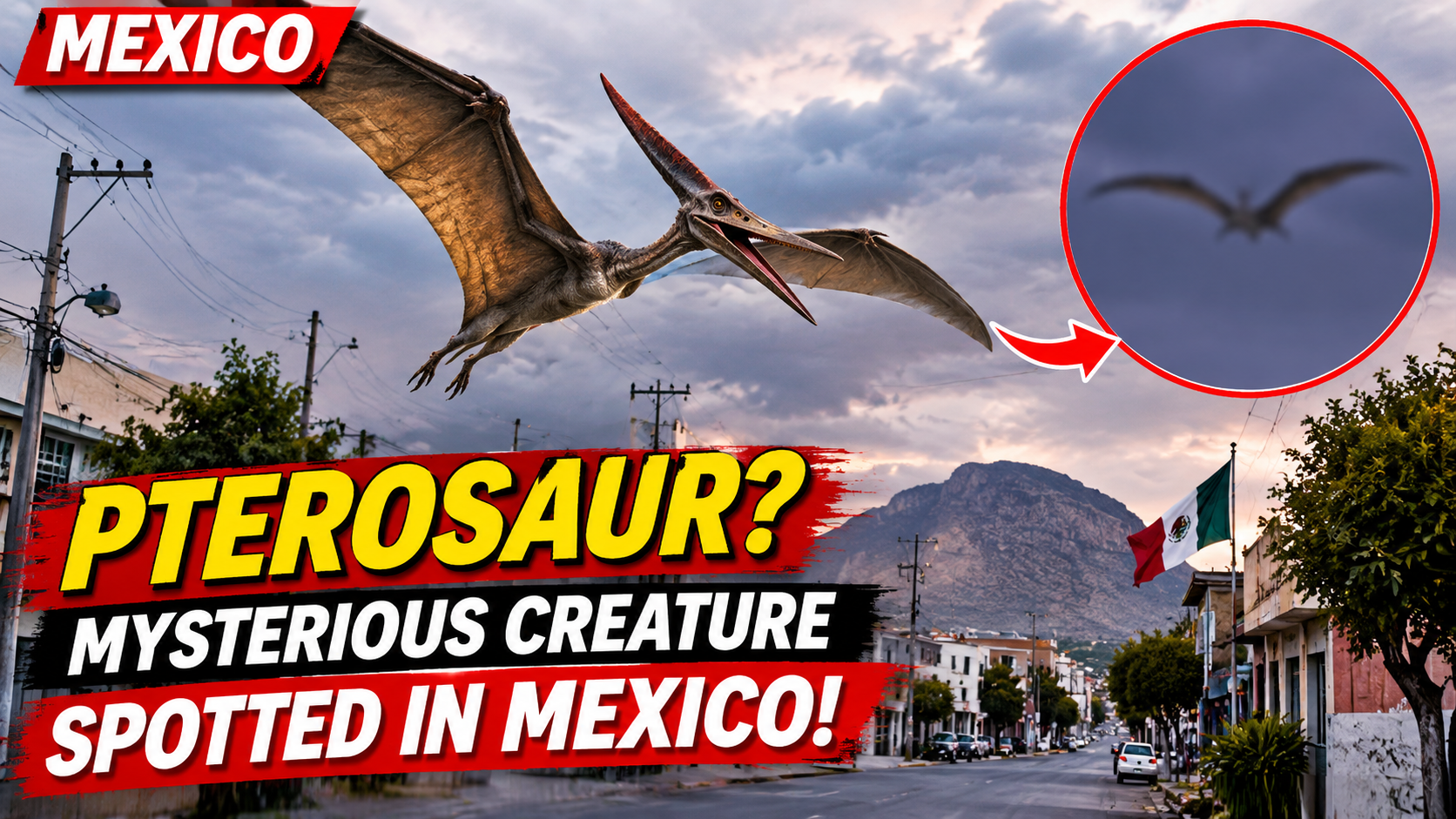
Mysterious footage from Ciudad Juárez has sparked online speculation about a prehistoric flying creature. But local authorities have rejected the claim, and available evidence points to a much more ordinary explanation.
A series of unusual videos circulating online has sparked debate after social media users claimed they show a pterosaur-like creature flying over parts of northern Mexico.
The footage, reportedly recorded around Ciudad Juárez in the state of Chihuahua, shows a dark, winged silhouette moving through the sky. Some posts have described the mysterious figure as a pterodactyl, a prehistoric flying reptile that lived alongside dinosaurs.
The videos have attracted widespread attention, with viewers questioning whether an extinct creature could somehow still exist.
However, there is currently no credible scientific evidence that a living pterosaur has been discovered in Mexico.
Local authorities have also challenged the claims, while reporting on the footage has offered a possible explanation involving a large bird.
Where did the mysterious footage come from?
The viral reports center on the Anapra area of Ciudad Juárez, near the U.S.-Mexico border.
One of the circulating recordings was reportedly captured on October 29, 2026. The short nighttime footage shows an unidentified flying shape moving across the sky.
The low image quality makes it difficult to identify the animal confidently from the video alone.
As the footage spread, paranormal and mystery-focused accounts began describing the figure as a possible surviving pterosaur.
Mexican media also reported that television personality and UFO promoter Jaime Maussan shared material related to the alleged sighting.
The online discussion grew further as additional clips and images were presented as possible evidence of unusual creatures in the region.
But the appearance of an unidentified shape in a video does not establish that it belongs to an unknown or prehistoric species.
Officials in Ciudad Juárez reject the claim
The extraordinary claims have not been supported by local authorities.
Sergio Rodríguez, director of Civil Protection in Ciudad Juárez, reportedly dismissed the circulating videos as digital entertainment without a factual basis.
The statement is important because the footage has been presented online as evidence of a potentially extraordinary animal sighting.
Authorities have not announced the discovery of a prehistoric creature, and no verified biological specimen has been presented.
There has also been no publicly established scientific investigation confirming that a pterosaur-like animal is living in the area.
Could the creature actually be a large bird?
One explanation reported in Mexican media is that the flying silhouette could be a great blue heron.
The great blue heron is a large bird found across North America. Its long wings and distinctive flight pattern can produce an unusual silhouette, particularly when filmed at night or from a distance.
A grainy recording can make an ordinary bird difficult to recognize, especially when the viewer is already expecting to see something unusual.
Specialist identification reported in local coverage has pointed toward the great blue heron as a possible explanation for the flying figure.
However, without access to the original camera files and a definitive examination, the exact identity of every object in the circulating clips cannot be established from the available footage alone.
AI-generated imagery adds another layer of confusion
The viral material has also raised questions about the use of artificial intelligence.
Some versions of the circulating video include dramatic images of pterosaur-like creatures flying through stylized skies and unusual visual effects.
Fact-checking coverage has identified synthetic imagery within the compilation. Maussan also reportedly acknowledged presenting an AI-enhanced image of the alleged creature.
That distinction matters.
An AI-enhanced image or digitally generated scene is not independent evidence that an animal exists in the real world.
The original low-quality footage, the enhanced images and the dramatic edits should not be treated as if they are all authentic recordings of the same event.
At this stage, the exact origin and editing history of every individual clip have not been publicly established.
What is a pterosaur?
Pterosaurs were flying reptiles that lived during the age of dinosaurs.
Although they are sometimes popularly called pterodactyls, pterosaurs were not dinosaurs. They were a separate group of prehistoric reptiles that developed the ability to fly.
The fossil record shows that pterosaurs disappeared approximately 66 million years ago, at the end of the Cretaceous Period.
Scientists have discovered extensive fossil evidence of these animals, but no verified living specimen has ever been documented.
A viral video, especially one with poor visibility or digitally altered imagery, is not enough to overturn that scientific evidence.
Why are these videos attracting so much attention?
Stories involving supposedly extinct animals often spread quickly because they combine mystery, unusual visuals and the possibility of an extraordinary discovery.
Short videos can also remove important context. A brief silhouette may look convincing when accompanied by a dramatic headline, even when the original recording does not clearly identify what is being shown.
Once a clip is shared repeatedly, viewers may begin treating the claim as established fact simply because it appears across multiple accounts.
That does not make the claim independently verified.
For now, the videos from Ciudad Juárez remain an online mystery rather than proof that a prehistoric flying reptile has returned.
Until researchers obtain verifiable evidence, the pterosaur claim should be treated with skepticism.